
Skip to content
SME AI Impact
Adoption ExcellenceLogistics· Knowledge retrieval

iHub Solutions

iHub Solutions put a natural-language assistant on its warehouse system and saved 15 hours a day.

Principal published result

$94,500

Projected annual cost savings

Evidence grade

BCanonical source supported

Grade B — Canonical source supported

Research coverage

90% coverage

Ten evidence dimensions, not an AI maturity score

Sources

4

4 sources · 3 beyond T0

Open www.ihubsolutions.com ↗Live site, not an official page of this showcase.

Share on LinkedIn

01The official record

Award citation, verbatim in substance
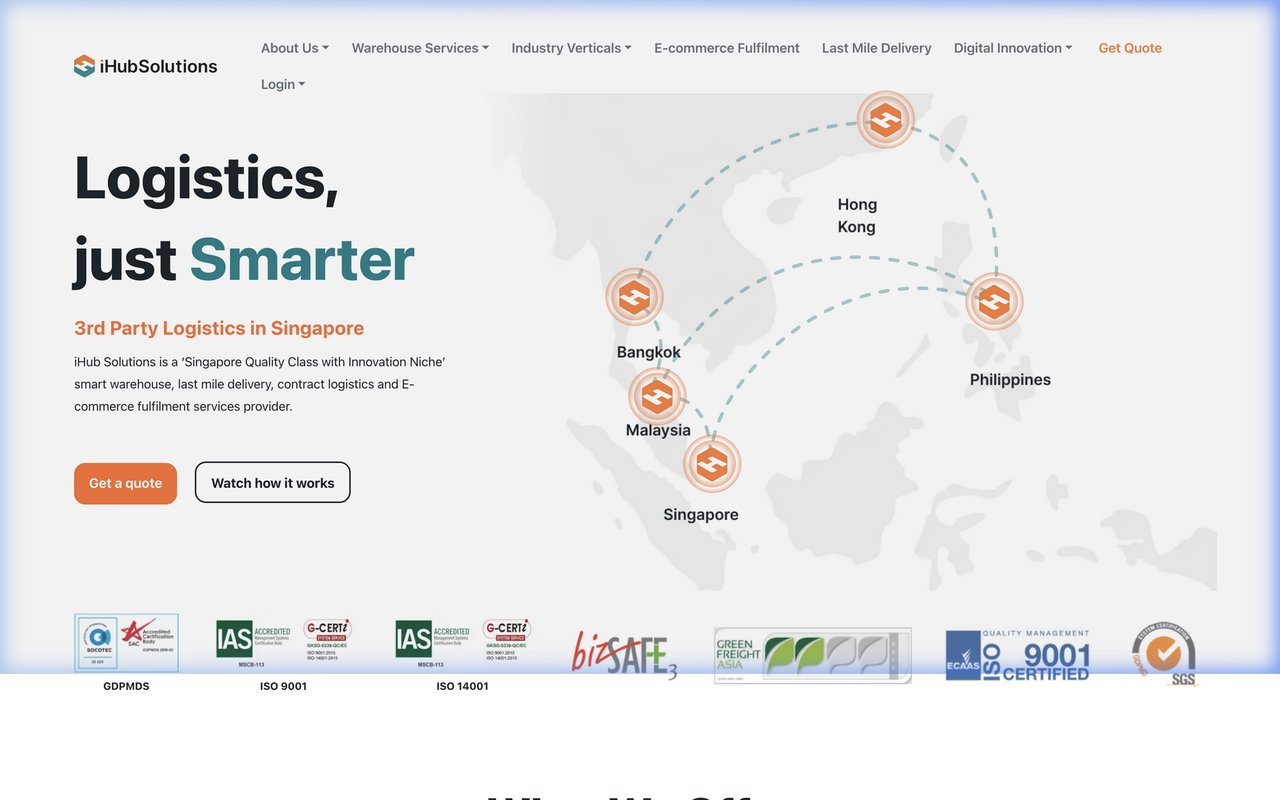
Homepage of iHub Solutions, captured 2026-10-19
iHub Solutions's homepage, captured 2026-10-19. Shown for identification and comment; it may differ from the award-winning implementation.Open live site ↗

Provides technology-enabled logistics solutions, including smart warehousing, e-commerce fulfilment and last-mile delivery services

Published key challenges

  • Labour-intensive report preparation. Ad hoc data requests required manual extraction, manipulation and report creation beyond standard system reports
  • Dependence on technical expertise. Complex requests required software developers to write SQL queries and retrieve information from underlying databases
  • High query-handling workload. Customer service and software development teams spent approximately 25 employee-hours daily responding to reporting and data requests

Gideon: GenAI Virtual Assistant

  • Natural-language data queries: Allows users to ask questions in plain language instead of searching reports or understanding database structures
  • Automated data retrieval: Converts user requests into SQL queries and retrieves data directly from iHub's Warehouse Management System
  • Interactive data analysis: Generates charts, refines queries through conversations and presents results in an easy-to-understand format
  • Self-service analytics: Empowers customers and non-technical employees to independently access operational insights without relying on technical teams

02SCQA case study

361 words
SSituation

iHub Solutions provides technology-enabled logistics, including smart warehousing, e-commerce fulfilment and last-mile delivery. Its customers need answers about their own stock: what is where, how much moved, and when it will arrive. The company runs a Warehouse Management System, and its public materials describe a Virtual Logistics System deployed across Singapore, Malaysia, Hong Kong and Thailand.

CComplication

Ad hoc data requests required manual extraction, manipulation and report creation beyond the standard system reports. Complex requests needed software developers to write SQL queries against the underlying database. Customer service and software development teams spent about 25 employee-hours a day responding to reporting and data requests. Developers were therefore doing reporting work instead of building, and customers waited for answers that the system already held. Customers experienced the delay as poor service, even though the data existed and was accurate.

QQuestion

How could customers and staff get answers from warehouse data in plain language, without a developer writing a query for each request?

AAnswer

iHub built Gideon, a generative AI virtual assistant that uses natural-language conversation to make warehouse and delivery data accessible. Users ask questions in plain language instead of searching reports or understanding database structure. The assistant converts requests into SQL queries and retrieves data directly from the Warehouse Management System. It generates charts, refines queries through conversation and presents results in a readable format. Self-service analytics lets customers and non-technical employees reach operational insight without the technical teams. The published result is $94,500 in projected annual cost savings, 60% less time handling data requests, and 15 hours saved per day. The critical design choice is that the assistant queries the system of record rather than a copy, which keeps the answer current but puts weight on query safety and access control. The citation does not describe how customer-level access is enforced, which is the main risk in exposing a shared warehouse database. The daily hours figure is more meaningful than the annual saving, because it describes capacity returned to the development team, and that capacity is what a logistics operator would otherwise have to buy in. The saving recurs monthly, which is what makes it worth engineering rather than buying as a one-off.

Implementation takeaway

Text-to-SQL works when the schema is yours and the permissions already exist. Point the assistant at the system of record, not a stale extract.

03Verified business results

Company-reported
Published business outcomes for iHub Solutions, as reported in the award citation.
MetricPublished resultAttribution
Projected annual cost savings$94,500Company-reported; published in the IMDA/SBF award citation
Time handling data requests60% lessCompany-reported; published in the IMDA/SBF award citation
Daily time saved15 hours per dayCompany-reported; published in the IMDA/SBF award citation

The award citation publishes relative changes and absolute volumes, not paired before-and-after values. Baseline figures are therefore not shown, and no improvement percentage has been calculated from them.

04Technology stack

Evidence status per layer
Technology stack for iHub Solutions, with evidence status for each layer.
LayerImplementationVendor / in-houseEvidenceSource
AI modelLanguage model for natural-language to SQL translation and chart selectionNot disclosedunknownStatedT0-AWARDS
IntegrationDirect query access to the Warehouse Management SystemIn-house, unnamedin-houseStatedT0-AWARDS
ProcessingConversational query refinement and chart generationIn-house, unnamedin-houseStatedT0-AWARDS
AccessCustomer and employee self-service analyticsIn-house, unnamedin-houseStatedT0-AWARDS
GovernanceNot described in any public sourceNot disclosedunknownStatedT0-AWARDS

A layer marked inferred includes a documented basis. Layers without a named vendor are left unnamed rather than filled with a plausible product.

05Implementation diagrams

Documented vs illustrative
Documented implementationEvidence-bounded
Plain-languagequestionGideonassistantSQLgenerationWarehouseManagementSystemChart andresultpresentationCustomer oremployeeINPUTPROCESSAISYSTEMHUMANOUTPUT

Components named in the award citation.

Illustrative reference architectureIllustrative only
User questionSchema-awareprompt layerQuerygenerationQueryallowlist androw…Read replicaChartrenderingINPUTPROCESSAISYSTEMOUTPUT

A feasible build for another logistics operator. This is not iHub's production system.

06Unconfirmed — technical inference

Not attempted

No public technical details were identified beyond the official award description. This case is not supported well enough to justify a technical inference, so none is offered.

07How another SME could build something similar

Advisory, not the winner's method

This section is guidance for other companies. It is not a description of what iHub Solutions did, and it is not endorsed by them.

Suitable for

  • · Logistics and warehousing
  • · Distribution
  • · Any operator with a well-structured operational database

Minimum requirements

  • · A documented schema with clear table and column names
  • · A read-only database role
  • · Row-level access rules per customer

Three implementation paths

Level 1

Canned reports

Build the most requested reports as self-service dashboards.

Use when: Requests repeat and the questions are known.

Level 2

Assisted query

Let staff ask in plain language, with generated SQL reviewed before running.

Use when: Requests vary and developers are the bottleneck.

Level 3

Self-service analytics

Give customers direct access with row-level permissions, logging and guardrails.

Use when: Volume and customer demand justify the controls.

Suggested sequence

  1. 1Start with a fixed set of the twenty most common questions
  2. 2Test query generation against those questions with known answers
  3. 3Add a read-only role and row limits before any user access
  4. 4Log every generated query for review
  5. 5Open self-service only after accuracy is stable

Tools and alternatives

  • · Language model with schema context
  • · Read replica
  • · Query logging
  • · BI or chart library

Risks and PDPA considerations

  • · A generated query that exposes another customer's data
  • · Expensive queries affecting production performance
  • · Confident answers from misinterpreted joins

KPIs to track

  • Query accuracy against known answers
  • Data request turnaround
  • Developer hours spent on reporting
  • Failed query rate
  • Access exceptions

08Research gaps

What remains unknown
  • No model or platform vendor is named.
  • Currency is published as '$' without specifying Singapore or US dollars.
  • Access control and query safety measures are not described publicly.

Are you this company? Submit documentation to upgrade your evidence grade.

If you have published technical documentation, vendor whitepapers, or third-party audits, submit documentation to our research desk. We update evidence grades upon verification.

09Sources

4 records
  1. Infocomm Media Development Authority (IMDA) and Singapore Business Federation (SBF) · 16 October 2026 · Retrieved 18 October 2026 · T0 — Canonical awards source

    Canonical source. Page last updated 16 October 2026. Publishes one profile per winner: company description, three key challenges, named AI solution, solution components and three headline metrics. No individual winner URLs are published.

  2. iHub Solutions · Retrieved 18 October 2026 · T1 — Direct primary source

    Company describes its Virtual Logistics System (VLS 2.0) deployed across Singapore, Malaysia, Hong Kong and Thailand. Link check on 18 October 2026 returned HTTP 403 to an automated client; the page was retrieved successfully during research and loads normally in a browser.

  3. Infocomm Media Development Authority (IMDA) · 13 October 2026 · Retrieved 19 October 2026 · T1 — Direct primary source

    Official government media release for SMEs Go Digital Day 2026 and inaugural SME AI Impact Awards at Suntec Singapore Convention & Exhibition Centre. Minister Josephine Teo presented awards to 30 SMEs.

  4. PR Newswire APAC (IMDA media release) · 21 May 2026 · Retrieved 18 October 2026 · T1 — Direct primary source

    Announces the inaugural awards, the two categories, the 30-winner ceiling, the Trustmark, and the 13 October 2026 announcement date.

Researched 18 October 2026 · Updated 18 October 2026 · Award citation retrieved 18 October 2026.

iHub Solutions is a winner of the SME AI Impact Awards 2026, organised by IMDA and SBF. This case study is independent analysis and is not an official company publication.

Related case studies

Similar technology and sector implementations

Homepage of Agape CP Holdings, captured 2026-10-18
Adoption ExcellenceBusiness Services
Winner · Award Cohort 2026

Agape CP Holdings

Agape CP Holdings cut post-call administration by 63% and expanded quality assurance coverage 16-fold.

Time on administrative tasks
63% less
Customer serviceAIndependently supported
Homepage of Nami Japanese Academy, captured 2026-10-18
Adoption ExcellenceEducation
Winner · Award Cohort 2026

Nami Japanese Academy

Nami Japanese Academy moved scheduling to a WhatsApp agent and cut no-shows by half.

Time on administrative tasks
Up to 83% less
Customer serviceBCanonical source supported
Homepage of Brew Interactive, captured 2026-10-18
Adoption ExcellenceMedia & Creative
Winner · Award Cohort 2026

Brew Interactive

Brew Interactive named its AI stack, cut client onboarding time by 85% and video production by about 85%.

Client onboarding
85% faster
Workflow automationBCanonical source supported