GetGo Technologies
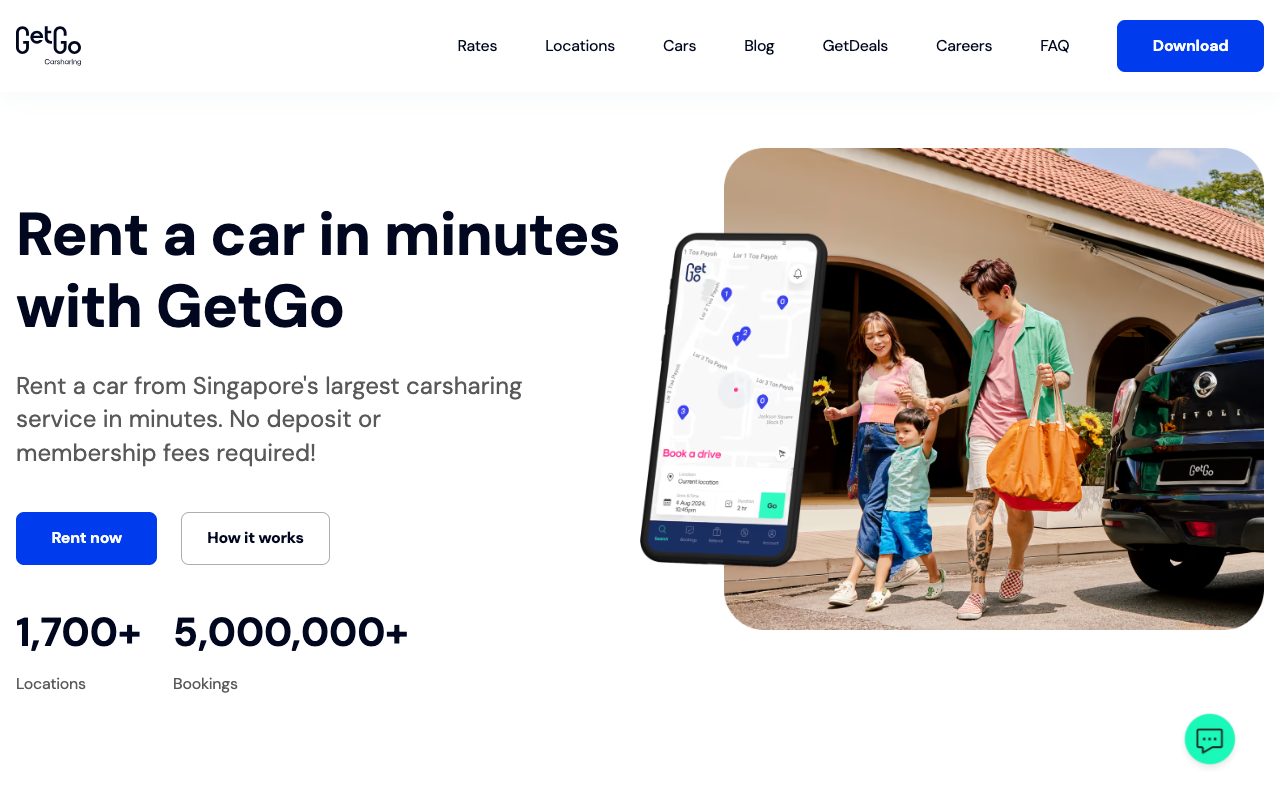
GetGo uses computer vision to attribute car damage to the right booking, recovering S$20,000 in two months.
- Damage-to-invoice lead time
- 53% reduction
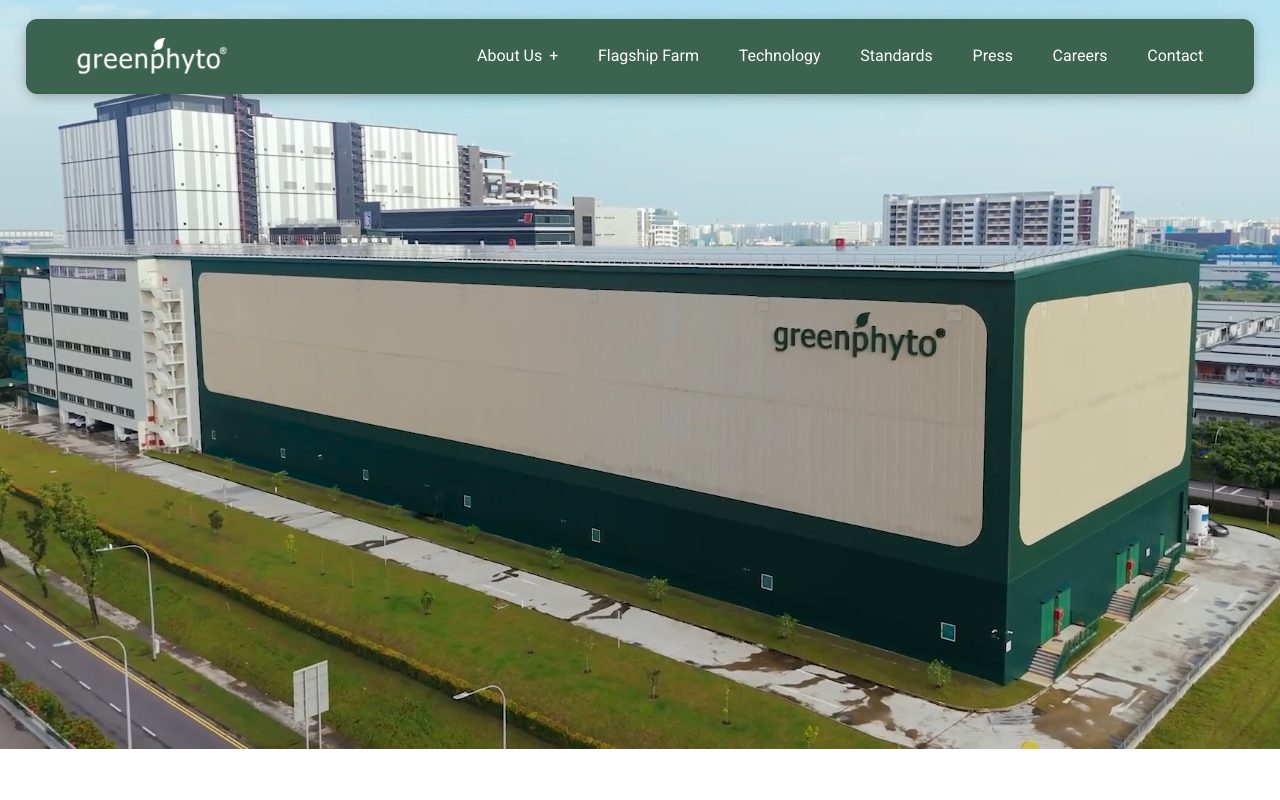
Greenphyto runs a 23-metre indoor farm on computer vision, cutting crop inspection time tenfold.
Principal published result
10x faster
Crop inspection time
Evidence grade
Grade A — Independently supported
Research coverage
Ten evidence dimensions, not an AI maturity score
Sources
3
3 sources · 2 beyond T0
Open greenphyto.com ↗Live site, not an official page of this showcase.

Operates a high-density indoor vertical farm for large-scale crop production
Greenphyto operates a high-density indoor vertical farm for large-scale crop production. The company opened a S$80 million facility in January 2026. Independent reporting describes a 23-metre growing structure, robots that place seedlings, and image analysis of plant height and leaf condition to track growth. Vertical farming compresses many growing layers into a small footprint, so a single undetected problem can affect a large share of output at once.
Plant defects and abnormal growth were not detected in time for intervention. Crop and equipment checks relied heavily on people working across multiple systems. Continuous crop measurement was limited, which made harvest planning difficult. In a stacked indoor farm, a person walking the racks sees a fraction of the crop at any moment, and the interval between inspections is the window in which a defect spreads. A defect found on a Tuesday walk-through had already affected the trays around it, and the cost appeared later as inconsistent yield rather than as a visible loss.
How could the farm inspect every growing layer continuously, catch defects earlier than a manual walk-through allows, and forecast harvest with enough confidence to plan supply?
Greenphyto built the AI-powered Farm Operations Management System, FOMS. It connects farm data, images, sensors and workflows into one system. Computer vision detects crop growth issues, defects and abnormalities earlier, and replaces many manual crop checks with image-based inspection. AI analysis of farm data improves yield forecasting, which supports harvest planning. Integrating farm systems, sensors and workflows reduces manual work, and real-time alerts flag problems such as lighting or device faults for follow-up. The published result is inspection ten times faster, a productivity improvement of up to 150 times, and 90% crop yield consistency. The company describes the platform as a fully integrated AI-driven autonomous farming system that lets operators farm without prior experience. Read plainly, the system moves the farm from periodic human observation to continuous machine observation, with people responding to exceptions. The citation does not state how many cameras cover the facility or how the model was trained, so the detection quality behind the tenfold figure is not documented. Yield consistency is the number that matters commercially, because a vertical farm's economics depend on predictable throughput across cycles rather than on peak output in a good one, and consistency is what buyers contract for.
Implementation takeaway
In a stacked growing environment, the sensor grid is the business. Continuous observation is what makes both quality and harvest forecasting possible.
| Metric | Published result | Attribution |
|---|---|---|
| Crop inspection time | 10x faster | Company-reported; published in the IMDA/SBF award citation |
| Productivity | Up to 150x improvement | Company-reported; published in the IMDA/SBF award citation |
| Crop yield consistency | 90% | Company-reported; published in the IMDA/SBF award citation |
The award citation publishes relative changes and absolute volumes, not paired before-and-after values. Baseline figures are therefore not shown, and no improvement percentage has been calculated from them.
| Layer | Implementation | Vendor / in-house | Evidence | Source |
|---|---|---|---|---|
| AI model | Computer vision for defect and growth-stage detection | In-house, unnamedin-house | Stated | T0-AWARDS |
| Sensing | Farm sensors, cameras and equipment telemetry | Not disclosedunknown | Stated | T0-AWARDS |
| Processing | Yield forecasting from farm data | In-house, unnamedin-house | Stated | T0-AWARDS |
| Integration | Farm systems and workflows joined into one operations system | In-house, unnamedin-house | Stated | T0-AWARDS |
| Automation | Robotic seedling placement and environmental controlBasis: Described in independent reporting on the facility, not in the award citation. | Not disclosedunknown | Stated | T3-GREENPHYTO-BLOOMBERG |
| Governance | Not described in any public source | Not disclosedunknown | Stated | T0-AWARDS |
A layer marked inferred includes a documented basis. Layers without a named vendor are left unnamed rather than filled with a plausible product.
Components named in the award citation.
A feasible build for another indoor farm. This is not Greenphyto's production system.
No public technical details were identified beyond the official award description. This case is not supported well enough to justify a technical inference, so none is offered.
This section is guidance for other companies. It is not a description of what Greenphyto did, and it is not endorsed by them.
Level 1
Scheduled imaging
Fixed cameras and a human reviewing a daily image set.
Use when: Inspection is manual and the team is small.
Level 2
Assisted detection
A trained classifier flags suspect plants and routes them to a grower.
Use when: Labelled images and stable lighting exist.
Level 3
Closed-loop farm operations
Join vision, sensors and equipment control, with forecasting and automated alerts.
Use when: The facility is instrumented and volumes justify engineering.
Are you this company? Submit documentation to upgrade your evidence grade.
If you have published technical documentation, vendor whitepapers, or third-party audits, submit documentation to our research desk. We update evidence grades upon verification.
Infocomm Media Development Authority (IMDA) and Singapore Business Federation (SBF) · 16 October 2026 · Retrieved 18 October 2026 · T0 — Canonical awards source
Canonical source. Page last updated 16 October 2026. Publishes one profile per winner: company description, three key challenges, named AI solution, solution components and three headline metrics. No individual winner URLs are published.
Greenphyto · Retrieved 18 October 2026 · T1 — Direct primary source
Company describes a fully integrated AI-driven autonomous farming platform that automates cultivation and optimises crop growth.
Energy Connects (Bloomberg syndication) · 7 January 2026 · Retrieved 18 October 2026 · T3 — Independent or supplementary
Independent report on the S$80 million, 23-metre Greenphyto facility, its automation and its use of AI to control growing conditions.
Researched 18 October 2026 · Updated 18 October 2026 · Award citation retrieved 18 October 2026.
Greenphyto is a winner of the SME AI Impact Awards 2026, organised by IMDA and SBF. This case study is independent analysis and is not an official company publication.
Related case studies

GetGo uses computer vision to attribute car damage to the right booking, recovering S$20,000 in two months.

TTS Group replaced manual traffic counts with computer vision, processing about 50 times more sites a month.

Accountingbpo turned a headcount-bound accounting back office into a supervised AI workflow.