GetGo Technologies
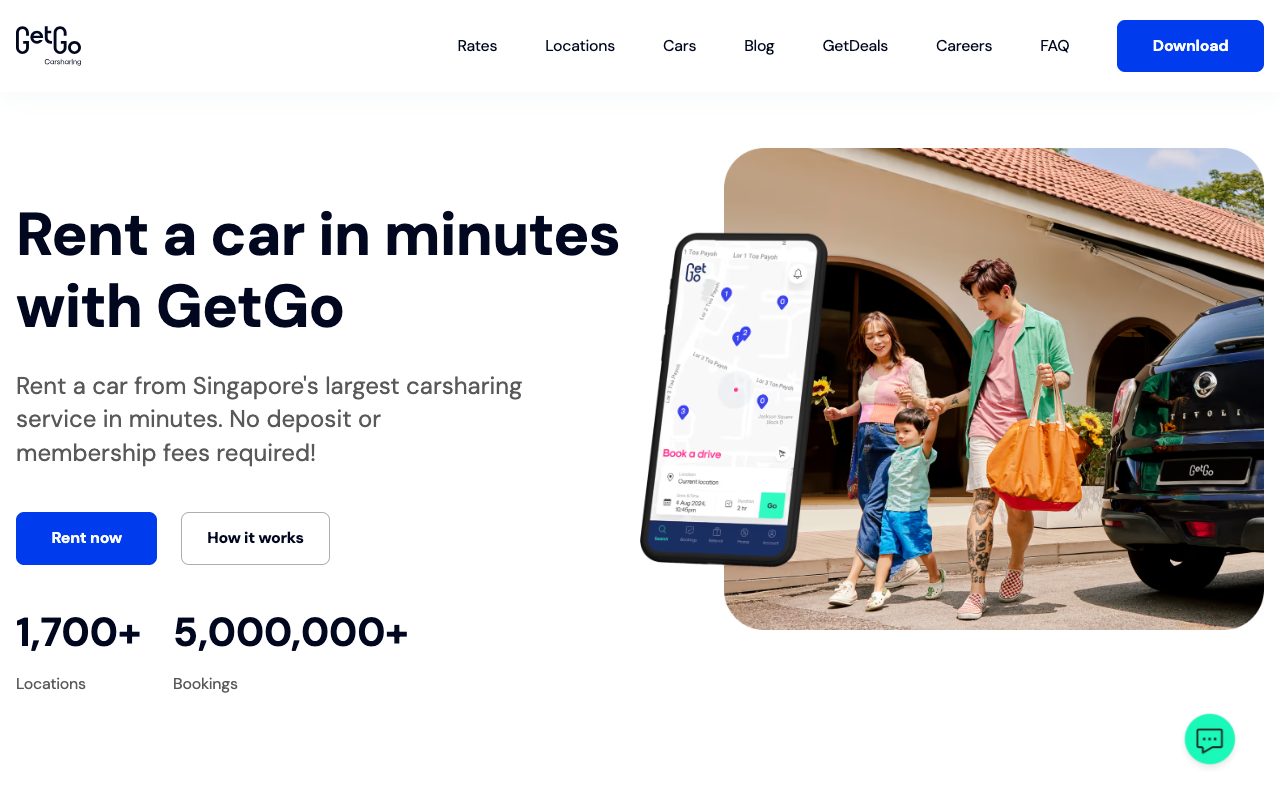
GetGo uses computer vision to attribute car damage to the right booking, recovering S$20,000 in two months.
- Damage-to-invoice lead time
- 53% reduction
TTS Group replaced manual traffic counts with computer vision, processing about 50 times more sites a month.
Principal published result
About 98% increase
Traffic-data acquisition capacity
Evidence grade
Grade B — Canonical source supported
Research coverage
Ten evidence dimensions, not an AI maturity score
Sources
4
4 sources · 3 beyond T0
Open ttsgroup.com.sg ↗Live site, not an official page of this showcase.

Provides transport planning, traffic engineering and transport analytics consultancy services.
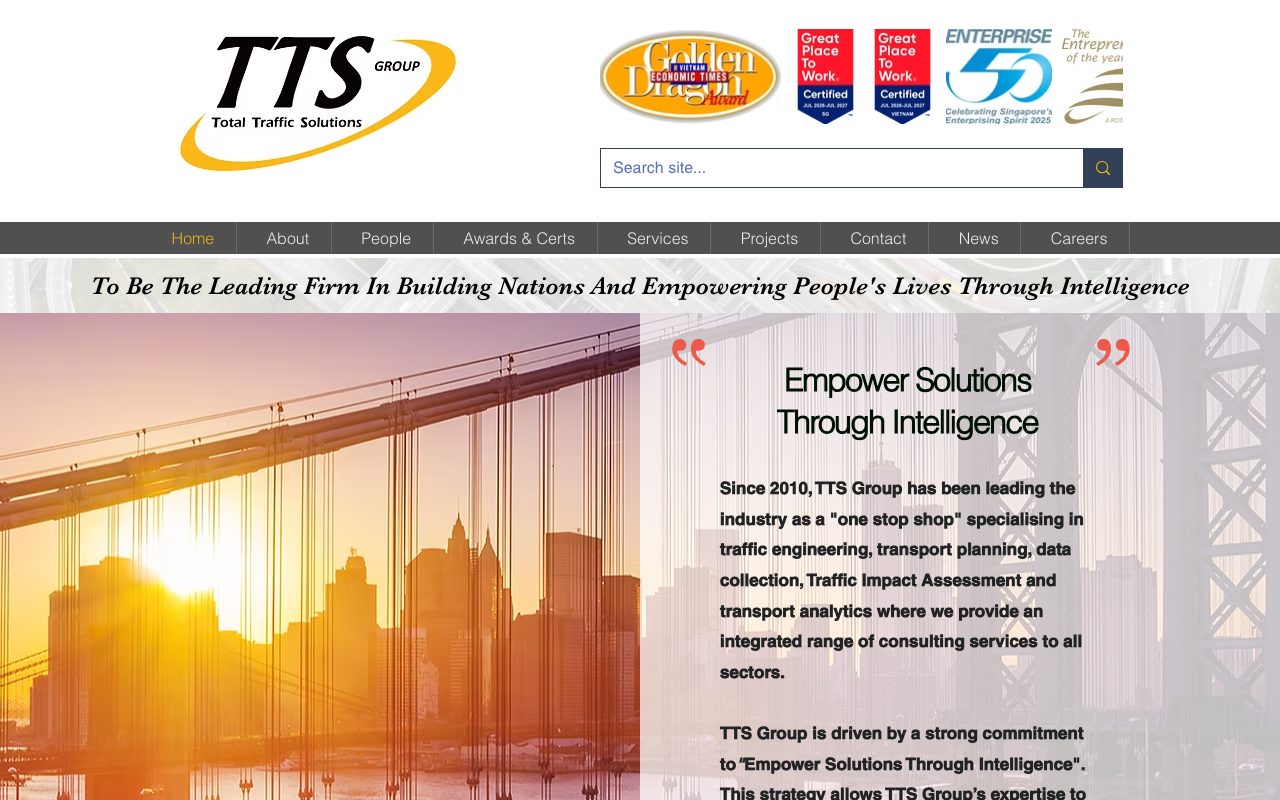
TTS Group provides transport planning, traffic engineering and transport analytics consultancy. Its clients are road authorities and developers who need evidence about how a junction or corridor behaves. The company's public materials describe AI-powered intelligent transport systems analytics within its portfolio. The core input is video of traffic, and the core output is a defensible assessment of risk.
Surveyors manually counted and classified vehicles and pedestrians, which required multiple personnel and extended shifts at high-volume sites. Engineers spent around 15 hours a week reviewing footage for a single intersection, which capped the number of sites the firm could assess. Assessment was reactive, because periodic observation and historical crash data make it difficult to detect near-misses and identify risk before an incident. A near-miss is, by definition, an event that does not appear in crash statistics. Waiting for collisions to accumulate means the evidence arrives only after the harm.
How could the firm analyse far more junctions without proportionally more surveyors and engineers, and detect risk before a collision occurs?
TTS Group built a proactive framework for near-miss-based traffic risk assessment. Computer vision detects, tracks and classifies vehicles and pedestrians, which reduces reliance on manual counting. Movement-pattern analysis identifies traffic conflicts that do not appear in conventional crash-based assessments. Traffic and near-miss data quantify risk and rank locations. AI-assisted intervention planning synthesises data from high-risk intersections to support targeted measures such as signal optimisation. Continuous post-intervention monitoring reassesses sites to measure change in safety risk and compare before and after. Engineers retain responsibility for safety recommendations. The published result is about a 98% increase in traffic-data acquisition capacity, about 30 hours saved per engineer each week, and roughly 50 times more sites processed monthly. The near-miss method is the substantive change: it shifts the evidence base from what happened to what nearly happened. The citation does not publish validation of the near-miss metric against observed crash frequency. The sites-processed figure is the strategic one, because it changes the unit of analysis from individual junctions to a network, and a network view is what makes proactive safety spending defensible to a road authority.
Implementation takeaway
Change the unit of evidence. Near-misses are more frequent than crashes, so they produce a usable sample before anyone is hurt.
| Metric | Published result | Attribution |
|---|---|---|
| Traffic-data acquisition capacity | About 98% increase | Company-reported; published in the IMDA/SBF award citation |
| Engineer time on manual footage review | About 30 hours saved per engineer each week | Company-reported; published in the IMDA/SBF award citation |
| Sites processed monthly | About 50x more | Company-reported; published in the IMDA/SBF award citation |
The award citation publishes relative changes and absolute volumes, not paired before-and-after values. Baseline figures are therefore not shown, and no improvement percentage has been calculated from them.
| Layer | Implementation | Vendor / in-house | Evidence | Source |
|---|---|---|---|---|
| AI model | Computer vision for vehicle and pedestrian detection, tracking and classification | In-house, unnamedin-house | Stated | T0-AWARDS |
| Analytics | Predictive analytics for near-miss and conflict detection | In-house, unnamedin-house | Stated | T0-AWARDS |
| Language model | Large language models supporting assessment and intervention planning | Not disclosedunknown | Stated | T0-AWARDS |
| Input | Traffic camera footage | Not disclosedunknown | Stated | T0-AWARDS |
| Governance | Engineers retain responsibility for safety recommendations | In-house, unnamedin-house | Stated | T0-AWARDS |
A layer marked inferred includes a documented basis. Layers without a named vendor are left unnamed rather than filled with a plausible product.
Components named in the award citation.
A feasible build for another traffic consultancy. This is not TTS Group's production system.
No public technical details were identified beyond the official award description. This case is not supported well enough to justify a technical inference, so none is offered.
This section is guidance for other companies. It is not a description of what TTS Group did, and it is not endorsed by them.
Level 1
Automated counting
Use detection to count vehicles and pedestrians, with manual spot checks.
Use when: Surveyor cost limits volume.
Level 2
Conflict analysis
Add trajectory tracking and near-miss scoring at selected junctions.
Use when: Crash data is too sparse to rank sites.
Level 3
Proactive safety programme
Add intervention planning and continuous post-intervention monitoring.
Use when: A client wants an ongoing safety programme.
Are you this company? Submit documentation to upgrade your evidence grade.
If you have published technical documentation, vendor whitepapers, or third-party audits, submit documentation to our research desk. We update evidence grades upon verification.
Infocomm Media Development Authority (IMDA) and Singapore Business Federation (SBF) · 16 October 2026 · Retrieved 18 October 2026 · T0 — Canonical awards source
Canonical source. Page last updated 16 October 2026. Publishes one profile per winner: company description, three key challenges, named AI solution, solution components and three headline metrics. No individual winner URLs are published.
Infocomm Media Development Authority (IMDA) · 13 October 2026 · Retrieved 19 October 2026 · T1 — Direct primary source
Official government media release for SMEs Go Digital Day 2026 and inaugural SME AI Impact Awards at Suntec Singapore Convention & Exhibition Centre. Minister Josephine Teo presented awards to 30 SMEs.
PR Newswire APAC (IMDA media release) · 21 May 2026 · Retrieved 18 October 2026 · T1 — Direct primary source
Announces the inaugural awards, the two categories, the 30-winner ceiling, the Trustmark, and the 13 October 2026 announcement date.
TTS Group · Retrieved 18 October 2026 · T1 — Direct primary source
Company describes AI-powered ITS analytics within its transport portfolio.
Researched 18 October 2026 · Updated 18 October 2026 · Award citation retrieved 18 October 2026.
TTS Group is a winner of the SME AI Impact Awards 2026, organised by IMDA and SBF. This case study is independent analysis and is not an official company publication.
Related case studies

GetGo uses computer vision to attribute car damage to the right booking, recovering S$20,000 in two months.

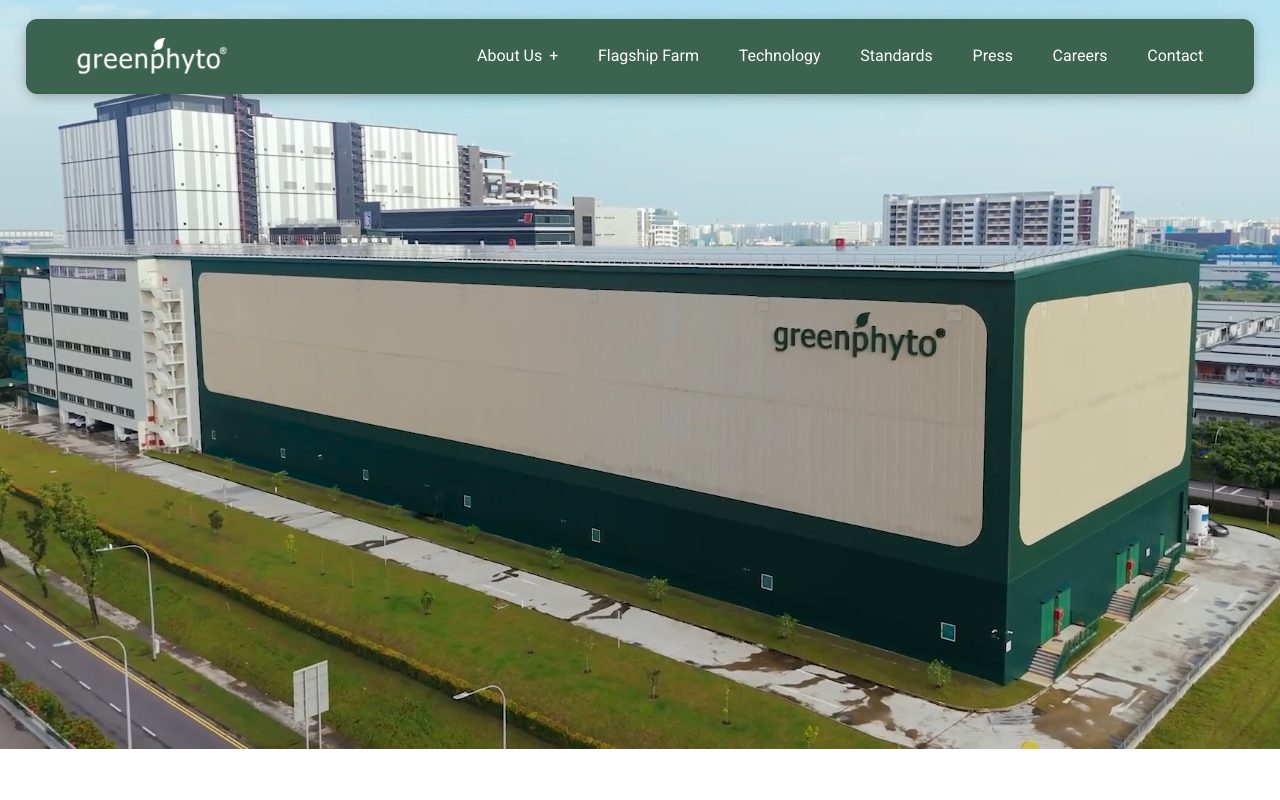
Greenphyto runs a 23-metre indoor farm on computer vision, cutting crop inspection time tenfold.

Agape CP Holdings cut post-call administration by 63% and expanded quality assurance coverage 16-fold.