
Skip to content
SME AI Impact
Innovation ExcellenceMedia & Creative· Generative media

Oceanus Media Global

Oceanus Media Global films against AI-built virtual sets, cutting production timelines by around 80%.

Principal published result

80% shorter

Production timelines

Evidence grade

BCanonical source supported

Grade B — Canonical source supported

Research coverage

95% coverage

Ten evidence dimensions, not an AI maturity score

Sources

2

2 sources · 1 beyond T0

Open oceanusmedia.global ↗Live site, not an official page of this showcase.

Share on LinkedIn

01The official record

Award citation, verbatim in substance
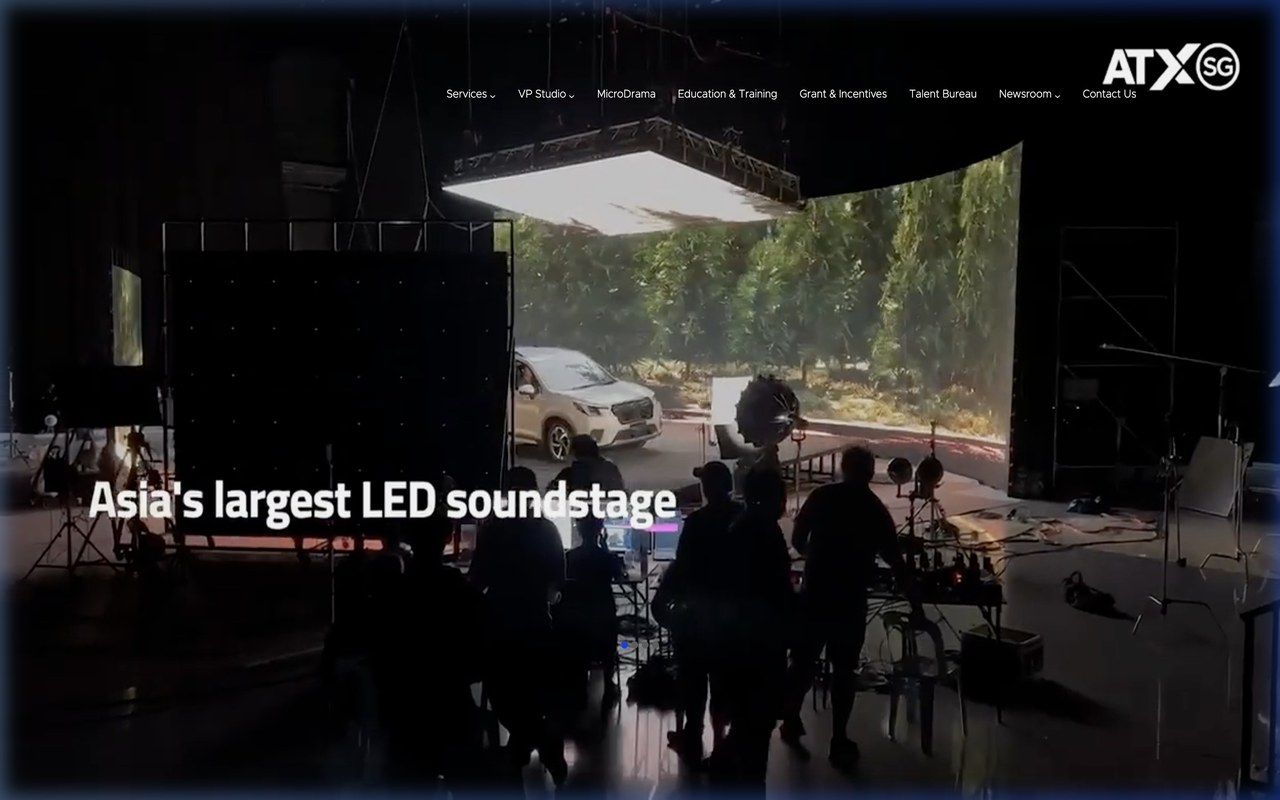
Homepage of Oceanus Media Global, captured 2026-10-19
Oceanus Media Global's homepage, captured 2026-10-19. Shown for identification and comment; it may differ from the award-winning implementation.Open live site ↗

Creative media technology company specialising in virtual production, generative AI, content production, distribution and IP licensing

Published key challenges

  • Long production timelines. Multi-location productions could take 14-15 weeks due to location scouting, permits, travel, set construction and filming
  • High production costs. Location fees, permits, travel, transport and set construction increased production costs significantly
  • Limited production capacity. Crews and equipment were largely committed to one major production at a time, limiting the number of projects the company could take on concurrently

AI-integrated Virtual Production Pipeline

  • AI-assisted pre-production: Supports script breakdown, scene planning, scheduling, storyboarding and visualisation before filming
  • AI-generated virtual environments: Creates digital environments and reconstructs real locations as virtual sets for filming in a controlled studio
  • AI-enabled filming: Films actors against AI-built virtual environments, with real-time camera tracking maintaining correct perspective
  • AI-supported visual effects: Automates repetitive editing tasks and supports the creation of visual-effects elements
  • AI-powered localisation and versioning: Supports dubbing in four languages and adapts approved content for different formats and platforms

02SCQA case study

350 words
SSituation

Oceanus Media Global is a creative media technology company specialising in virtual production, generative AI, content production, distribution and IP licensing. Third-party coverage from 2023 describes its work in virtual and augmented production. The company's cost base is driven by where it films, not only by what it films.

CComplication

Multi-location productions could take 14 to 15 weeks, because location scouting, permits, travel, set construction and filming run in sequence. Location fees, permits, travel, transport and set construction added significant cost. Crews and equipment were largely committed to one major production at a time, which capped the number of concurrent projects. The business was therefore limited by logistics rather than by creative capacity. Each location added a fixed cost that had to be recovered whether or not the shoot ran to schedule.

QQuestion

How could the company produce multi-location content without moving a crew to each location, and take on more projects with the same crew?

AAnswer

Oceanus built an AI-integrated virtual production pipeline that creates multiple locations virtually. It combines generative AI, computer vision and AI agents across pre-production, filming, post-production and localisation, with creative control retained by the team. Pre-production support covers script breakdown, scene planning, scheduling, storyboarding and visualisation. AI-generated virtual environments create digital sets and reconstruct real locations for filming in a controlled studio. Actors are filmed against those environments with real-time camera tracking maintaining correct perspective. AI-supported visual effects automate repetitive editing tasks and help build effects elements. Localisation supports dubbing in four languages and adapts approved content for different formats and platforms. The published result is around 80% shorter production timelines, up to 85% lower production costs, and a 200% increase in multi-location project capacity. The economics change because the studio becomes the location. The citation does not name the generation models or describe the studio hardware, so the technical basis of the 80% figure is not documented. A cost reduction of this size changes which briefs are viable, not only how profitably existing ones are delivered, because a client with a modest budget can now be offered a multi-location treatment that was previously out of reach.

Implementation takeaway

Move the location into the studio, not the crew to the location. Fixed costs become reusable assets.

03Verified business results

Company-reported
Published business outcomes for Oceanus Media Global, as reported in the award citation.
MetricPublished resultAttribution
Production timelines80% shorterCompany-reported; published in the IMDA/SBF award citation
Production costsUp to 85% lowerCompany-reported; published in the IMDA/SBF award citation
Multi-location project capacity200% increaseCompany-reported; published in the IMDA/SBF award citation

The award citation publishes relative changes and absolute volumes, not paired before-and-after values. Baseline figures are therefore not shown, and no improvement percentage has been calculated from them.

04Technology stack

Evidence status per layer
Technology stack for Oceanus Media Global, with evidence status for each layer.
LayerImplementationVendor / in-houseEvidenceSource
Generative AIVirtual environment generation and set reconstructionNot disclosedunknownStatedT0-AWARDS
Computer visionReal-time camera tracking for correct perspectiveNot disclosedunknownStatedT0-AWARDS
AgentsAI agents across pre-production, post-production and localisationIn-house, unnamedin-houseStatedT0-AWARDS
ProductionLED volume or controlled studio filming environmentBasis: Filming against virtual environments with live camera tracking normally requires a controllable studio and tracking system. The specific technology is not named.Not disclosedunknownInferredT0-AWARDS
LocalisationDubbing in four languages and format versioningNot disclosedunknownStatedT0-AWARDS
GovernanceCreative control retained by the production teamIn-house, unnamedin-houseStatedT0-AWARDS

A layer marked inferred includes a documented basis. Layers without a named vendor are left unnamed rather than filled with a plausible product.

05Implementation diagrams

Documented vs illustrative
Documented implementationEvidence-bounded
Script and briefAI pre-productionAI virtualenvironmentsReal-time cameratrackingStudio filmingAI visual effectsLocalisation andversioningINPUTPROCESSAIOUTPUT

Components named in the award citation.

Illustrative reference architectureIllustrative only
Storyboardand shot listImage andvideogenerationLED volumeplaybackTrackedcameraCompositingDeliverableversionsINPUTPROCESSAISYSTEMOUTPUT

A feasible build for another production house. This is not Oceanus Media Global's production system.

06Unconfirmed — technical inference

Not attempted

No public technical details were identified beyond the official award description. This case is not supported well enough to justify a technical inference, so none is offered.

07How another SME could build something similar

Advisory, not the winner's method

This section is guidance for other companies. It is not a description of what Oceanus Media Global did, and it is not endorsed by them.

Suitable for

  • · Film and video production
  • · Advertising and brand content
  • · Corporate communications
  • · Training content producers

Minimum requirements

  • · A controlled studio space with consistent lighting
  • · A shot list that separates virtual and practical elements
  • · Clear rights and consent for generated environments

Three implementation paths

Level 1

AI-assisted pre-production

Use generative tools for storyboards, mood boards and concept frames.

Use when: Pre-production is the bottleneck.

Level 2

Virtual set production

Build reusable virtual environments and film against them with tracking.

Use when: Location cost and travel dominate the budget.

Level 3

Integrated virtual pipeline

Join generation, tracking, effects and localisation into one governed workflow.

Use when: Volume and multi-market delivery justify the studio investment.

Suggested sequence

  1. 1Choose one recurring location type and build it as a virtual set
  2. 2Shoot a short test against the set and compare with a practical shoot
  3. 3Standardise camera tracking and colour pipeline
  4. 4Add automated versioning for formats and languages
  5. 5Measure cost and days per deliverable

Tools and alternatives

  • · Generative image and video tools
  • · Game engine for virtual sets
  • · Camera tracking system
  • · Compositing software

Risks and PDPA considerations

  • · Rights issues in generated imagery
  • · Uncanny results that fail brand review
  • · Client expectations set by unrealistic demos

KPIs to track

  • Days from brief to delivery
  • Cost per finished minute
  • Number of concurrent projects
  • Revision rounds
  • Localisation cost per language

08Research gaps

What remains unknown
  • No generative model or engine vendor is named.
  • The 14 to 15 week baseline is stated without specifying project type.
  • The studio technology stack is not documented publicly.

Are you this company? Submit documentation to upgrade your evidence grade.

If you have published technical documentation, vendor whitepapers, or third-party audits, submit documentation to our research desk. We update evidence grades upon verification.

09Sources

2 records
  1. Infocomm Media Development Authority (IMDA) and Singapore Business Federation (SBF) · 16 October 2026 · Retrieved 18 October 2026 · T0 — Canonical awards source

    Canonical source. Page last updated 16 October 2026. Publishes one profile per winner: company description, three key challenges, named AI solution, solution components and three headline metrics. No individual winner URLs are published.

  2. Singapore Business Review · 26 May 2023 · Retrieved 18 October 2026 · T3 — Independent or supplementary

    Partner content describing Oceanus Media Global's virtual production and immersive showcase work.

Researched 18 October 2026 · Updated 18 October 2026 · Award citation retrieved 18 October 2026.

Oceanus Media Global is a winner of the SME AI Impact Awards 2026, organised by IMDA and SBF. This case study is independent analysis and is not an official company publication.

Related case studies

Similar technology and sector implementations

Homepage of Brew Interactive, captured 2026-10-18
Adoption ExcellenceMedia & Creative
Winner · Award Cohort 2026

Brew Interactive

Brew Interactive named its AI stack, cut client onboarding time by 85% and video production by about 85%.

Client onboarding
85% faster
Workflow automationBCanonical source supported
Homepage of GOODSTUPH, captured 2026-10-19
Adoption ExcellenceMedia & Creative
Winner · Award Cohort 2026

GOODSTUPH

GOODSTUPH moved production in-house with generative AI and cut campaign production from four weeks to seven days.

Cost savings
More than 30%
Generative mediaBCanonical source supported
Homepage of Best Marketing Agency, captured 2026-10-18
Innovation ExcellenceMedia & Creative
Winner · Award Cohort 2026

Best Marketing Agency

Best Marketing Agency rebuilt its agency operating model around AI agents, and revenue per employee rose 71%.

Revenue per employee
71% increase
Workflow automationBCanonical source supported